






(Including Practical Travel Tips, Ecological Significance, and Cultural Insights)
Introduction: The Marvel of Jingkieng Jri
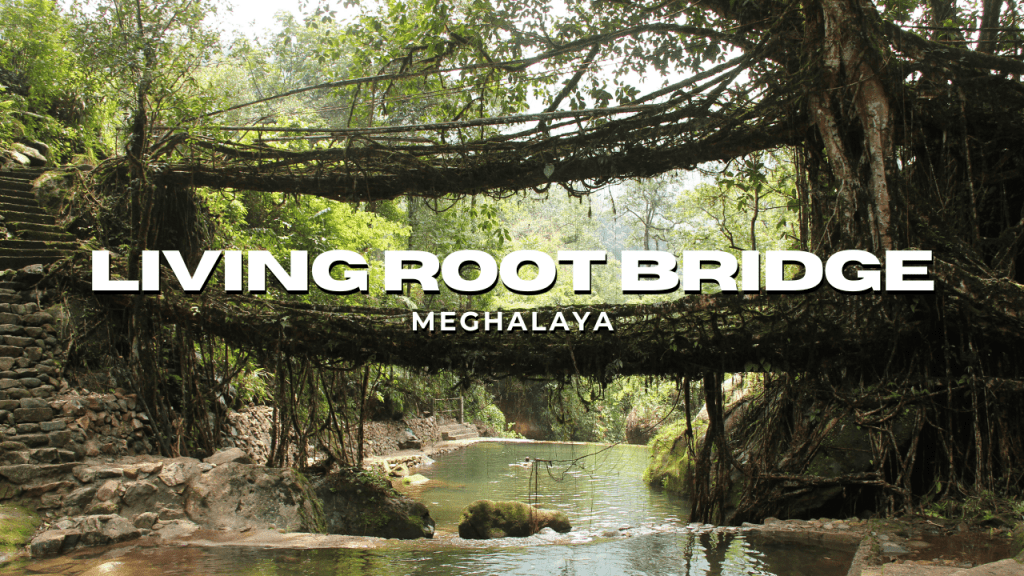
The living root bridges (jingkieng jri) lie nestled in the remote, rain-drenched valleys of Meghalaya, India. They stand as a testament to human ingenuity. They also showcase nature’s resilience. These organic suspension bridges are grown from the aerial roots of the Ficus elastica tree. The indigenous Khasi and Jaintia tribes create them. They are not just functional structures. They are symbols of a deep-rooted biocultural heritage. These bridges span rivers and gorges. They take 15–30 years to mature and last centuries. They blend seamlessly into the lush rainforests of one of the wettest regions on Earth.
This guide brings together scientific research, travel logistics, and cultural context. It helps travelers, conservationists, and curious minds explore these wonders responsibly.
1. How to Reach the Living Root Bridges
Nearest Major Cities & Transport
- Guwahati, Assam (163 km to Shillong): The nearest airport and railhead.
- Shillong, Meghalaya (58 km to Tyrna Village): The capital of Meghalaya, accessible via a 3-hour drive from Guwahati.
- Tyrna Village (Starting point for treks): From Shillong, hire a taxi (₹2,500–3,000 round-trip). Alternatively, take a shared Sumo jeep to Cherrapunji (Sohra), then continue to Tyrna.
Trekking Routes
- Nongriat Village (Double-Decker Bridge):
- Distance: 3,000+ steep steps (descending 2,400 ft) from Tyrna.
- Duration: 3–4 hours round-trip (moderate difficulty).
- Entry Fee: ₹20–50 (managed by village committees).
- Mawlynnong (Asia’s Cleanest Village): A detour to explore bamboo bridges and nearby root bridges.
- Riwai Village (Easiest Access): A 15-minute walk from Mawlynnong.
Weather & Best Time to Visit
- Dry Season (Oct–May): Ideal for trekking; temperatures 15–25°C.
- Monsoon (Jun–Sep): Lush greenery but slippery trails; bridges withstand flash floods.
- Avoid: Heavy rains in July–August.
2. The Science Behind the Bridges
Construction Process
- Root Guidance: Aerial roots of Ficus elastica are trained across rivers using bamboo scaffolds and hollow Areca catechu trunks.
- Inosculation: Roots fuse naturally over time, forming dense, load-bearing networks.
- Maintenance: Villagers prune roots, replace bamboo, and add stones/soil for stability.
Structural Advantages
- Resilience: Withstand monsoons, landslides, and dynamic loads better than steel or concrete.
- Self-Repair: Roots thicken and strengthen with age.
- Carbon Sequestration: Each bridge absorbs ~10–15 tons of CO₂ over its lifespan.
3. Ecological & Cultural Significance
Biodiversity Hotspot
- Keystone Species: Ficus elastica supports epiphytes, birds (like hornbills), and insects.
- Sacred Groves: Protected forests around bridges host rare orchids and medicinal plants.
Khasi & Jaintia Traditions
- Community Ownership: Bridges are maintained by clans (kur) or village councils (dorbar).
- Bequest Value: Locals volunteer 14 days/year for bridge upkeep (as per CVM studies).
- Eco-Theandric Worldview: Belief in harmony between humans, nature, and the divine.
4. Responsible Tourism: Challenges & Solutions
Current Threats
- Overtourism: 40,000+ visitors annually strain fragile ecosystems.
- Infrastructure Pressure: Concrete paths and litter degrade sites.
- Cultural Erosion: Younger generations migrate to cities, risking loss of traditional knowledge.
Sustainable Practices
- Optimal Entry Fees: Research suggests increasing fees to ₹154/visit (current: ₹30–50) to fund conservation.
- Carrying Capacity: Limit daily visitors during peak seasons (Oct–May).
- Community-Led Homestays: Stay in villages like Nongriat (₹800–1,500/night) to support local livelihoods.
5. Planning Your Visit: Tips & Essentials
Packing List
- Footwear: Non-slip trekking shoes (paths are mossy and steep).
- Rain Gear: Waterproof jackets and dry bags (Meghalaya = abode of clouds).
- Hydration: Carry water bottles; avoid single-use plastics.
Ethical Guidelines
- Respect Sacred Sites: Do not disturb rituals or remove plants.
- Hire Local Guides: ₹500–800/day (ensures income and precise storytelling).
- Leave No Trace: Pack out all waste.
6. The Future of Living Root Bridges
Innovations & Global Applications
- Hybrid Designs: Combining steel cables with root guidance for faster construction.
- Baubotanik: German researchers (e.g., Ferdinand Ludwig) adapt Khasi techniques for urban green infrastructure.
- Ecotourism Models: Replicate Meghalaya’s community-led approach in Indonesia, Costa Rica, and Peru.
Call to Action
- Support NGOs: Like the Living Bridge Foundation (Meghalaya).
- Volunteer: Join bridge-building workshops or reforestation drives.
Conclusion: A Bridge Between Past and Future
The living root bridges of Meghalaya are more than tourist attractions—they are living classrooms teaching resilience, sustainability, and cultural pride. By visiting mindfully, travelers can help preserve these marvels for future generations. They can experience one of Earth’s most extraordinary collaborations between humans and nature.
“The bridges remind us that growth takes time, but with patience and care, even the wildest rivers can be crossed.”
Extra Resources:
- Meghalaya Tourism
- Living Bridge Foundation
- Research Papers: Sustainability 2020, 12, 3267 (Regenerative Design Analysis) | IABSE Conference 2015 (Structural Engineering Insights)

Leave a comment