
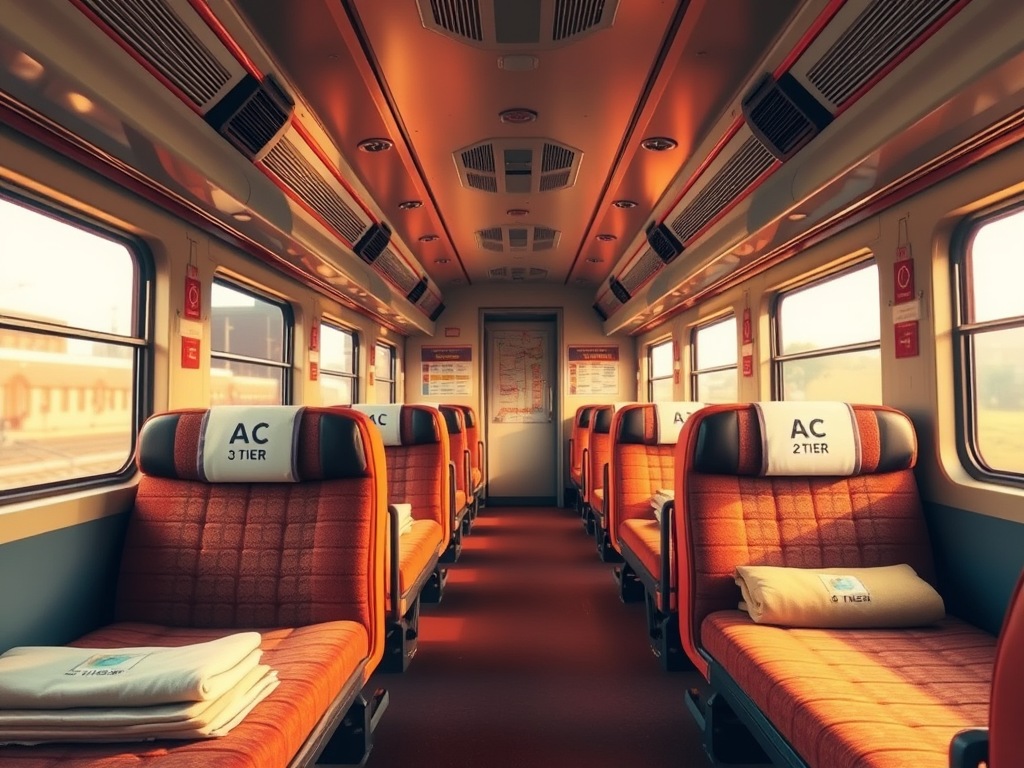
Navigating the sprawling network of Indian Railways can be an adventure in itself. A quintessential part of this experience is understanding the intricate system of berths. They represent your personal space on a journey. This journey can span thousands of kilometers. This guide will demystify the numbers. It will explain the various types of berths. Additionally, it will unveil some well-kept secrets to help you travel smarter and more comfortably.
Cracking the Code: Berth and Coach Numbering Explained
At first glance, the seat numbers and coach codes on an Indian Railways ticket might seem random. However, they follow a logical pattern that, once understood, can tell you a lot about your upcoming journey.
Coach Codes: Each coach is identified by a code that signifies its class. Common codes include:
- S: Sleeper Class (Non-AC)
- 3A: AC 3-Tier
- 2A: AC 2-Tier
- 1A: AC First Class
- CC: AC Chair Car
- 2S: Second Seating (Non-AC)
- SL: Sleeper Class (this is often used interchangeably with ‘S’)
Berth Numbering: Within each coach, the berths are numbered sequentially. Here’s a general breakdown for sleeper and AC coaches:
A standard sleeper or AC 3-Tier coach is divided into compartments. Each compartment has six berths. There is also a side section with two berths.
- Compartments: These have a Lower Berth (LB), Middle Berth (MB), and an Upper Berth (UB) on each side.
- Side Section: This consists of a Side Lower Berth (SL) and a Side Upper Berth (SU).
The numbering typically follows a pattern. A block of 8 berths is repeated. There are 6 berths in the compartment and 2 on the side. For instance, in a Sleeper class coach with 72 seats, the numbering would be:
- Berths 1-8 (Compartment 1)
- Berths 9-16 (Compartment 2)
- …and so on.
Visualizing the Layout: The best way to understand your position is to refer to a seat map. Several online resources and apps provide detailed coach layouts for different train types. The newer LHB (Linke Hofmann Busch) coaches are included. They have a different seating arrangement compared to the older ICF (Integral Coach Factory) coaches.
A Berth for Every Budget: Understanding the Types
Indian Railways offers a variety of travel classes. Each class has unique berth arrangements. They cater to different budgets and comfort levels.
1. Sleeper Class (SL): The Authentic Indian Experience
This is the most common and budget-friendly option for overnight journeys. The berths are arranged in a 3+3+2 configuration. There are three tiers on each side of the compartment and two on the side.
- Pros: Economical, a great way to experience the diversity of India and interact with fellow passengers.
- Cons: Non-air-conditioned, can get crowded, and cleanliness can sometimes be a concern.
2. AC 3-Tier (3A): The Middle-Class Comfort
A step up from Sleeper Class, 3A coaches are air-conditioned and provide bedding (a sheet, pillow, and blanket). The berth arrangement is identical to Sleeper Class.
- Pros: Air-conditioned comfort at a reasonable price, bedding is provided.
- Cons: Can feel a bit cramped due to the three-tier arrangement.
3. AC 2-Tier (2A): More Space and Privacy
In 2A, the arrangement is a more spacious two-tier system within the compartments. This means no middle berths, offering more headroom and a less crowded feel. The side section remains the same with a Side Lower and a Side Upper berth. Curtains are provided for each berth for added privacy.
- Pros: More comfortable and spacious than 3A, curtains for privacy.
- Cons: More expensive than 3A.
4. AC First Class (1A): The Pinnacle of Comfort
The most luxurious class, 1A offers lockable cabins for ultimate privacy. These cabins come in two configurations:
- Coupe: A two-berth cabin, ideal for couples or those seeking solitude.
- Cabin: A four-berth cabin, suitable for families or small groups.
Bedding is of a higher quality, and meals are often served at your seat.
- Pros: Maximum privacy and comfort, spacious cabins, personalized service.
- Cons: Significantly more expensive than other classes.
5. AC Chair Car (CC) and Second Seating (2S): For Shorter Journeys
These classes are designed for daytime travel and offer seating rather than berths. AC Chair Car provides comfortable, reclining seats in an air-conditioned environment, while Second Seating is the non-AC equivalent.
Unveiling the Secrets: Tips and Tricks for a Better Journey
Now for the insider knowledge that can transform your travel experience from ordinary to exceptional.
1. The Quest for the Lower Berth:
Lower berths are the most sought-after. Senior citizens and families with children particularly seek them. This preference is due to the convenience of not having to climb. Here’s how to increase your chances of securing one:
- Book Early: The Indian Railways booking algorithm has a quota for lower berths that gets filled up quickly. Booking as soon as the reservation window opens (usually 120 days in advance) is your best bet.
- Mention Your Preference: Always select “Lower” as your berth preference while booking.
- Senior Citizen Quota: Male passengers aged 60 and above can avail of the senior citizen quota. Female passengers aged 45 and above can also use this benefit. This quota prioritizes lower berths.
- Travel with a Female Passenger: Having a female passenger in your booking increases your chances of obtaining a lower berth. This is due to a separate quota.
2. The Elusive Coupe in First Class (1A):
Getting a two-berth coupe in 1A is often a matter of luck and priority. Here’s what you need to know:
- Priority Allotment: Coupes are typically prioritized for VIPs, railway officials, and couples traveling together.
- Booking Strategy: When booking for two people, the system is more likely to allocate a coupe. Mentioning a preference for a coupe in the request form at the reservation counter (for offline bookings) can sometimes help. For online bookings, there is no direct option to select a coupe.
3. The Solo Traveler’s Sanctuary: Side Berths
For those traveling alone, the side berths can be a great choice:
- Side Lower (SL): Offers a window seat with a view and converts into two seats during the day. It provides a sense of personal space.
- Side Upper (SU): Once you’re up, you are generally undisturbed until you decide to come down. It’s a good option for those who prefer to sleep early or for longer durations.
4. The VIKALP Scheme: Your Safety Net for Waitlisted Tickets
Don’t be disheartened by a waitlisted ticket. The VIKALP scheme (Alternate Train Accommodation Scheme) offers a ray of hope. You can opt for this scheme while booking. If your ticket remains waitlisted after the chart is prepared, you may receive a confirmed berth. It could be in an alternate train on the same route. There are no extra charges for this facility.
5. The Freedom of Circular Journey Tickets:
For the avid explorer, Circular Journey Tickets are a hidden gem. They allow you to plan a multi-city itinerary and book a single ticket that covers the entire trip. This is more convenient than booking individual tickets for each leg of the journey. It can also be more economical due to telescopic fare benefits.
6. Unwritten Rules of the Rails:
- The Middle Berth Etiquette: The middle berth should ideally be folded down during the day. This is typically from 6 AM to 10 PM. This allows all passengers in the compartment to sit comfortably on the lower berth.
- Respecting Personal Space: While camaraderie is common, be mindful of your co-passengers’ privacy. Do not be overly intrusive.
- Charging Point Courtesy: Share the charging points. Do not leave your devices plugged in for extended periods after they are fully charged.
Understand the logic behind the berth system. Employ these insider tips. This way, you can navigate the Indian Railways with confidence. Make your journey as memorable as the destination itself. Happy travels!
Leave a Reply