
By Mehmet Özbakır
Some cities are best understood through their monuments. Gaziantep, in south-eastern Türkiye, is best understood through a plate. Locals call it simply Antep, and since 2015 it has been a UNESCO Creative City of Gastronomy. For a traveller who loves food, it is one of the most rewarding places in the country, and one of the easiest to explore on foot.
I live and work in Gaziantep. If you have walked through the sweet shops of an Indian bazaar and watched trays of mithai being cut and weighed, you will feel at home here very quickly. Here is how I would introduce the city, one plate at a time.
The green heart of the city
Everything in Gaziantep’s kitchen begins with the pistachio. The orchards grow on the dry, stony hills around the city, and many families still own a small piece of land where they pick their own nuts every year.
There is a detail that surprises most visitors: the pistachio used in the best sweets is picked early in summer, before it is fully ripe. Locals call it boz. It is smaller and less oily than a ripe nut, but it keeps a bright green colour and a fresh, slightly sharp taste. When a pastry looks almost unnaturally green, this is the reason.
Plate one: katmer for breakfast
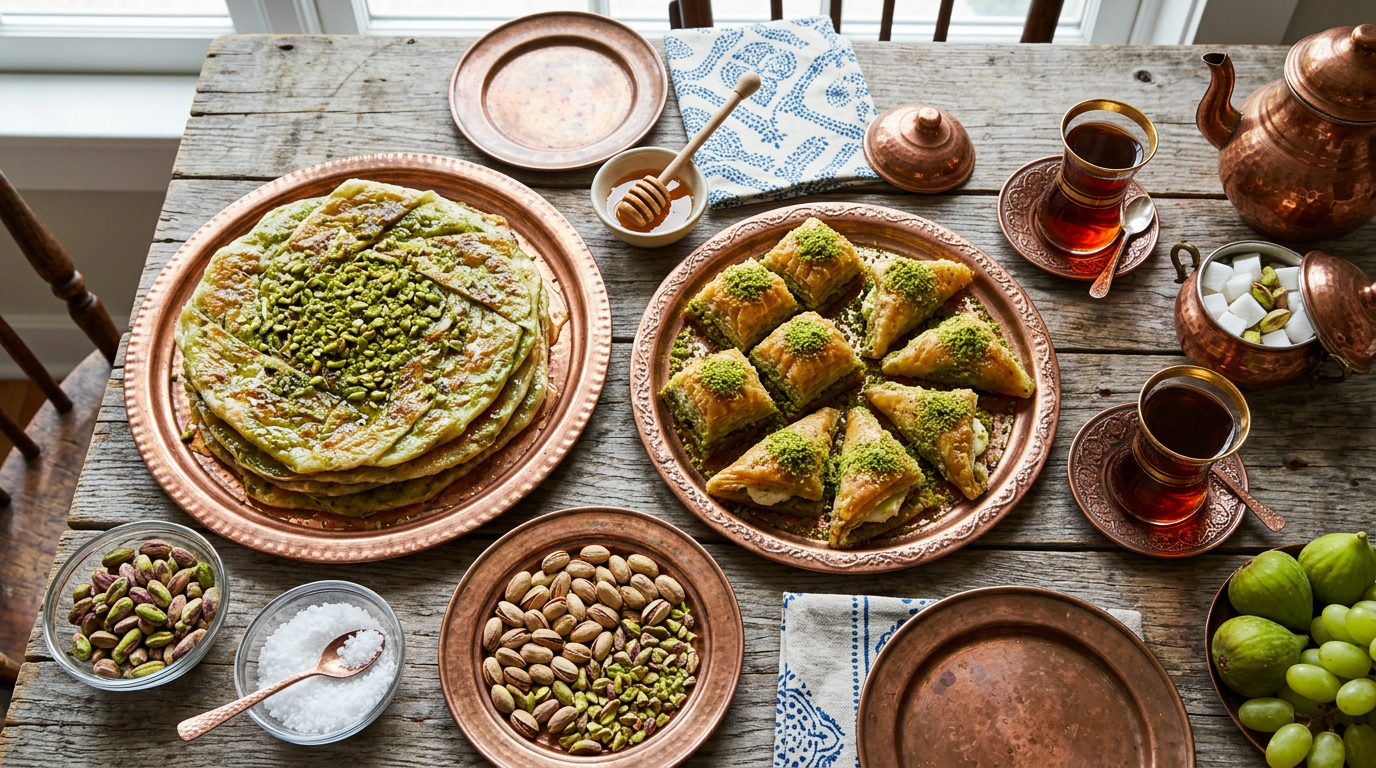
Start the day the way many people here do, with katmer. A paper-thin sheet of dough is folded around crushed pistachios, clotted cream and sugar, baked quickly and cut into squares. It is rich, warm and meant to be shared. Many places only make it in the morning, so go early and order one portion for two.
Plate two: baklava, the city’s signature
Antep baklava was the first product from Türkiye to be registered as a protected geographical indication in the European Union, in 2013. It is made with around forty very thin sheets of pastry, butter, a thick layer of pistachio and syrup.
A good piece is easy to recognise. The pistachio should be bright green, not brown. The top should be golden and crisp, and it should crackle when you press it lightly with a fork. The syrup should stay inside the pastry, not form a pool on the plate. Ask for a mixed plate so you can compare the classic square with havuç dilimi, the long “carrot slice” cut from the edge of the round tray, which many locals consider the best part.
Plate three: something soft, something rolled
Two more sweets are worth tasting. Şöbiyet is a triangle of pastry filled with pistachio and a light semolina cream, softer and richer than classic baklava. Dürüm or sarma is thin dough rolled tightly around whole pistachios and sliced into rounds: very green, very nutty, with little pastry.
Between the plates: the bazaars
After so much sweetness, walk it off in the old bazaar quarter below the castle. In Bakırcılar Çarşısı, the coppersmiths’ bazaar, craftsmen still hammer copper by hand, including the large round trays in which baklava is baked. Nearby, Zincirli Bedesten, a covered market from the eighteenth century, and the old spice streets sell pistachios in every form, along with dried peppers, aubergines and fruit hanging in long strings. If you want to buy pistachios, ask to taste first; a good seller will always let you.
Plate four: a cup to slow down
Before you leave, sit down in one of the old coffee houses near the bazaar and try menengiç kahvesi. It is not made from coffee beans at all but from roasted berries of the terebinth tree, the wild relative of the pistachio, and it is usually served with milk. It tastes nutty and earthy and is a perfect pause between sweets.
Practical notes for Indian travellers
- Vegetarian travellers will find the sweets easy: baklava, katmer, şöbiyet and dürüm are made with dough, butter, pistachio, sugar and cream. Many savoury dishes in Gaziantep contain meat, so if you are vegetarian, it helps to learn the word etsiz, which means “without meat”.
- Eat sweets in the morning. The best trays are baked very early and are often gone by afternoon.
- Buy by weight. Most shops sell baklava by the kilo or by the portion, and a small mixed box is the easiest way to taste several kinds.
- For the journey home, choose kuru baklava, the drier kind with less syrup, which travels better.
A last word
In Gaziantep, sharing sweets is a way of saying welcome. Before religious holidays, families here used to bake baklava at home to offer to every visitor who came the next morning, much like the boxes of sweets exchanged during Diwali. Today most people buy it from the shops, but the habit of sharing has not changed. So if a shopkeeper offers you a piece to taste, say yes. That is the real flavour of the city.
Author details
Short bio:
Mehmet Özbakır lives and works in Gaziantep, Türkiye. He works at Antep Foods, a chocolate and confectionery maker in the city whose factory has exported since 2002, and writes about the food culture of south-eastern Türkiye: pistachios, baklava and the traditions around them.
Links:
- Website: https://antepfoods.com/
- Instagram: https://www.instagram.com/antep.foods
- Facebook: https://www.facebook.com/1320543937801399
Leave a Reply