
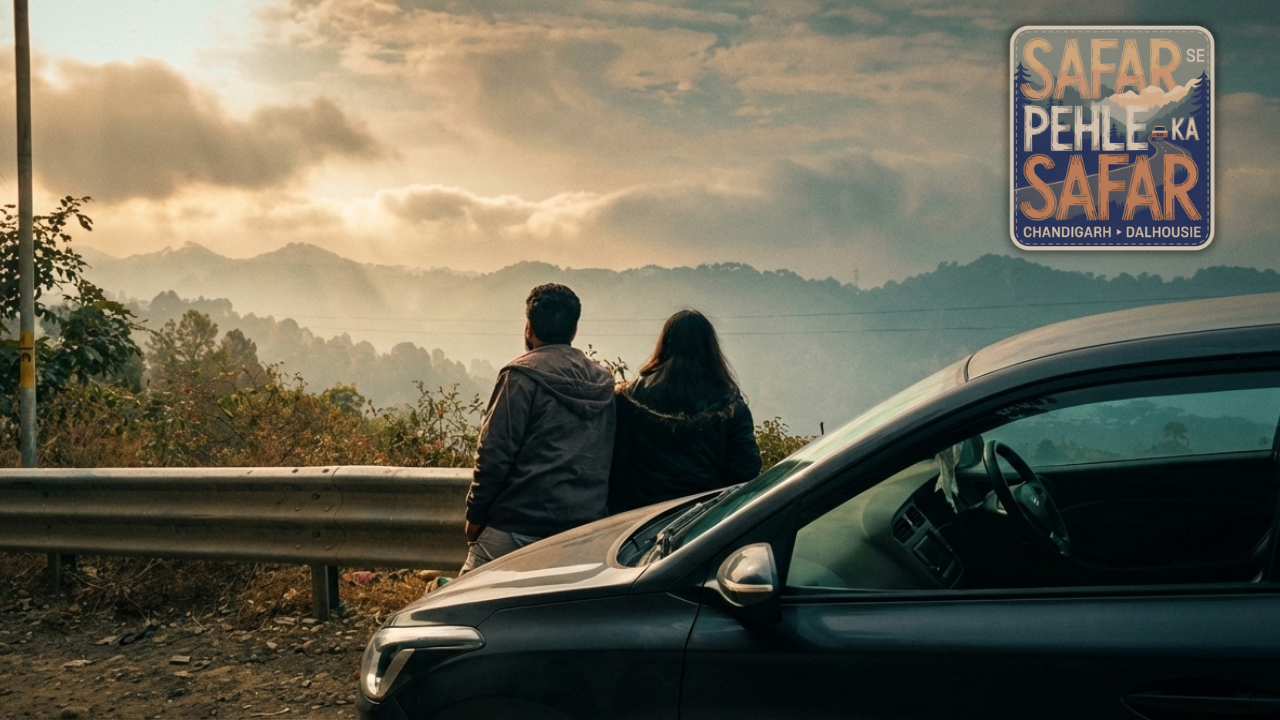
Transportation, Geography, and Strategic Regional Connectivity
Geographic Setting and Logistical Foundations of the Chamba Highlands
The historical and logistical identity of Dalhousie is inextricably linked to its topographical complexity. The town is situated in the western reaches of Himachal Pradesh within the Chamba district. It is famously distributed across five primary hills—Kathlog, Patreyn, Tehra, Bakrota, and Balun. These altitudes foster a diverse ecological landscape of pine, deodar, and oak forests.
This geographical fragmentation necessitates a highly specialized transportation strategy. The town serves as a critical node for colonial-era heritage tourism. It is also a gateway to the high-altitude regions of the Pir Panjal Range and the Pangi Valley.
The movement of people and goods into this region depends on the transition from the Punjab plains. It also relies on the rugged Himalayan foothills. The primary logistical anchor for the entire sector is the city of Pathankot. It is located in the north on the border with Punjab. Pathankot acts as the indispensable transit hub for rail, air, and road travelers. The relationship between Pathankot and Dalhousie goes beyond a simple distance metric. It is a fundamental logistical conduit. Through this pathway, the socio-economic vitality of the Chamba district flows.
Table 1: Primary Strategic Distances and Connectivity Metrics
| Route Origin | Road Distance (km) | Estimated Travel Time | Elevation Gradient | Primary Highway |
|---|---|---|---|---|
| Pathankot | 80–87 | 2.5–3.5 Hours | Low to High | NH154A |
| Chamba | 45–54 | 1.5–2 Hours | Mountainous | State Highway |
| Khajjiar | 20–24 | 1 Hour | High Alpine | Link Road |
| Gaggal (Kangra) | 107–135 | 3.5–4.5 Hours | Moderate | NH154A |
| Amritsar | 199–213 | 4.5–5.5 Hours | Plains to Hills | NH54 / NH154A |
| Chandigarh | 313–317 | 6–8 Hours | Multi-terrain | NH44 / NH154A |
| New Delhi | 485–565 | 11–13 Hours | Expressway/Highway | NH44 |
The town’s altitude shades it with a variety of vegetation. Its location provides panoramic views of the Ravi River. The river twists below the hills like a silver snake. Such beauty, however, comes with significant navigational constraints. The infrastructure must support seasonal surges during the summer and long weekends. It also needs to maintain resilience against the harsh winters that pound the region with heavy snow.
The administrative center of Dalhousie is concentrated around Gandhi Chowk and Subhash Chowk. These are two key intersections. They serve as the terminal points for most public and private transportation services.
Aviation Access Framework: Regional Gateways and Commercial Viability
The aviation sector for Dalhousie is currently in a state of flux. It is influenced by national connectivity schemes. It is also affected by regional commercial viability. Dalhousie does not have its own airstrip. However, several airports in the surrounding states and districts offer different levels of access.
Historically, the Pathankot Airport (IXP) was seen as the most convenient regional hub. This was due to its proximity of approximately 90 kilometers. Commercial operations at Pathankot Airport have fallen silent as of late 2025 and early 2026. This is under the UDAN (Ude Desh Ka Aam Naagrik) scheme. This suspension of service is due to infrastructure-related challenges. It is also caused by low passenger loads and the end of the three-year Viability Gap Funding (VGF) tenure.
The Gaggal Airport in Kangra (Dharamshala) is now the most critical domestic terminal for the region. It is located approximately 107 to 135 kilometers away. This airport maintains frequent flight schedules from major hubs like Delhi and Chandigarh. The flights are serviced primarily by Air India Regional and SpiceJet. The journey from Gaggal to Dalhousie typically takes about 3.5 hours by road, necessitating a pre-arranged taxi or bus service.
Table 2: Aviation Access Points and Current Operational Status (2025–2026)
| Airport Name | Code | Proximity to Dalhousie | Key Carriers | Operational Status |
|---|---|---|---|---|
| Gaggal (Kangra) | DHU | 107–135 km | Air India, SpiceJet | Fully Operational; High Demand |
| Pathankot | IXP | 80–90 km | N/A | Non-operational for commercial flights |
| Amritsar (Intl) | ATQ | 197–213 km | Air India, IndiGo, International | Fully Operational; Major Hub |
| Jammu | IXJ | 170–180 km | Various Domestic | Fully Operational |
| Chandigarh | IXC | 315–317 km | All major Indian airlines | Major Strategic Hub |
A significant trend in regional aviation is the increasing reliance on Amritsar’s Sri Guru Ram Dass Jee International Airport. It offers a more robust international and domestic schedule, even though it is further away. This makes it the preferred choice for foreign tourists and long-distance travelers. The road route from Amritsar follows the Batala–Gurdaspur–Pathankot corridor. It begins the mountain ascent to Dalhousie, with a total driving time of roughly five hours.
Environmental factors also play a decisive role in aviation logistics. During the winter months, dense fog frequently reduces visibility to zero at airports in Pathankot, Amritsar, and Jammu. This is especially true in December and January. This often results in large-scale flight cancellations, impacting the travel plans of thousands of tourists. Meteorological experts note that afternoon flight arrivals are logistically safer for those planning a same-day road transfer to Dalhousie.
Railway Connectivity: Broad-Gauge Lifelines and Heritage Corridors
The rail network serves as the most reliable and highest-capacity transport mode for reaching the Dalhousie sector. Pathankot is the primary broad-gauge train station on the border with Punjab. It connects the hills of Himachal to the rest of India.
The rail infrastructure is split between two major stations. These are Pathankot Junction (PTK) and Pathankot Cantt (PTKC), which was formerly known as Chakki Bank. Pathankot Cantt is particularly significant. It lies on the main line connecting Delhi to Jammu and Katra. It serves as a major halt for several superfast and express trains.
The Vande Bharat Express has revolutionized travel from New Delhi to the region. It provides a six-hour high-speed connection. This connection caters to the premium tourist demographic. This service, along with the Jammu Rajdhani and the Uttar Sampark Kranti, has reduced the psychological distance. This reduction is felt between the national capital and the Chamba highlands.
Table 3: Strategic Rail Connectivity from New Delhi to Pathankot Terminals
| Train Name | Train Number | Origin | Destination | Dep. Time | Duration | Class Options |
|---|---|---|---|---|---|---|
| Vande Bharat Express | 22439 | NDLS | PTKC | 06:00 | 5h 10m | EC, CC |
| Jammu Rajdhani | 12425 | NDLS | PTKC | 20:40 | 6h 30m | 1A, 2A, 3A |
| Uttar Sampark Kranti | 12445 | NDLS | PTKC | 20:50 | 7h 10m | 1A, 2A, 3A, SL |
| Shri Shakti AC SF | 22461 | NDLS | PTKC | 19:05 | 6h 55m | 1A, 2A, 3A |
| Malwa Express | 12919 | NDLS | PTKC | 04:30 | 7h 57m | 1A, 2A, 3A, SL |
| Dauladhar Express | 14035 | DEE | PTK | 23:20 | 8h 50m | 1A, 2A, 3A, SL |
| Tata Jat Express | 18101 | DLI | PTK | 21:25 | 13h 20m | 2A, 3A, SL |
The broad-gauge network is complemented by the Kangra Valley Railway. This is a narrow-gauge line that offers a heritage experience. The journey starts from Pathankot Junction. The track runs through the foothills. ‘Dalhousie Road’ station (DLSR) is the second stop after Pathankot. However, it is not the most efficient way to reach Dalhousie town itself. Many people mistakenly believe this station is in the town of Dalhousie. It is actually located in the plains, approximately 10 kilometers from Pathankot Junction. Travelers seeking to reach Dalhousie from this station would still require an 80-kilometer road journey.
Table 4: Kangra Valley Railway Schedule (Select Passenger Service 52471)
| Station Name | Code | Distance from PTK | Arrival Time | Departure Time |
|---|---|---|---|---|
| Pathankot Junction | PTK | 0.0 km | — | 02:05 |
| Dalhousie Road | DLSR | 9.9 km | 02:23 | 02:24 |
| Nurpur Road | NUPR | 19.9 km | 02:42 | 02:44 |
| Talara | TLRA | 29.4 km | 03:04 | 03:06 |
| Bharmar | BRMR | 39.3 km | 03:26 | 03:27 |
| Kangra | KGRA | 94.4 km | 06:13 | 06:15 |
| Joginder Nagar | JDNX | 163.7 km | 11:00 | — |
For those coming from Chandigarh, the rail options are similarly robust. The Hemkunt Express is the most frequently cited daily service. It departs Chandigarh late at night. It arrives at Pathankot Cantt in the early hours of the morning. This schedule is perfectly timed for onward bus or taxi transfers.
Public Road Transport Systems: HRTC, PUNBUS, and PRTC Networks
Road transport is the quintessential mode of travel within Himachal Pradesh, and Dalhousie is no exception. A comprehensive network of public bus services serves the town. The Himachal Road Transport Corporation (HRTC) operates these services. Additionally, Punjab Roadways (PUNBUS) and the Pepsu Road Transport Corporation (PRTC) are involved.
These state-run operators provide a tiered service structure. They offer “Ordinary” non-AC buses that reach the most remote villages. They also have luxury “Himsuta” Volvo coaches that connect Dalhousie to New Delhi and Chandigarh.
Table 5: Public Bus Timings and Fares (Delhi – Dalhousie Corridor)
| Operator | Service Type | Dep. (Delhi ISBT) | Arr. (Dalhousie) | Approx. Fare (INR) |
|---|---|---|---|---|
| HRTC | Ordinary (3+2) | 17:50 | 07:10 | 710–802 |
| HRTC | A/C Executive | 19:00 | 08:15 | 787 |
| HRTC | Himsuta AC Volvo | 20:15 | 09:30 | 1437–1750 |
| Private | AC Sleeper | Varied | Varied | 1200–2200 |
The regional connectivity from Chandigarh is equally vital. Most buses depart from the ISBT Sector 43 bus stand, which serves as the primary hub for Himachal-bound traffic.
Table 6: Roadway Connectivity from Chandigarh to Pathankot Gateway
| Operator | Service Type | First Bus | Last Bus | Frequency | Approx. Fare (INR) |
|---|---|---|---|---|---|
| HRTC | Himdhara AC Seater | 00:10 | 18:30 | 7+ Daily | 524–544 |
| HRTC | Ordinary (Non-AC) | 07:00 | 22:30 | Regular | 492 |
| CTU | HVAC Seater | 07:50 | — | Daily | 472 |
| PUNBUS | Ordinary | Varied | Varied | Frequent | ~240 |
| Private | Luxury Sleeper | 00:15 | 23:50 | 150+ Daily | 399–1100 |
Within the Chamba district, the local bus network is managed by the HRTC’s Dharamshala and Chamba divisions. Regular shuttle services run between Pathankot, Banikhet, and Dalhousie, providing essential mobility for the local workforce and budget travelers.
Last-Mile Mountain Access: Taxi Unions and Private Mobility Solutions
The final 80–87 kilometer ascent from Pathankot to Dalhousie is the most tactical phase of the journey. While public buses are available, a significant portion of travelers opt for private taxis. A well-organized system of local taxi unions controls this segment. They operate at Gandhi Chowk, Subhash Chowk, and the Pathankot railway stations.
Table 7: Comprehensive Taxi Fare Matrix (Pathankot – Dalhousie One-Way)
| Vehicle Category | Model Examples | Passenger Cap. | Estimated Fare (INR) | Additional Km Charge |
|---|---|---|---|---|
| Hatchback | Alto, WagonR, Swift | 4 | 1418–2200 | 9–14 |
| Sedan | Dzire, Etios, Ciaz | 4 | 1575–2500 | 9–14 |
| SUV (Standard) | Ertiga, Xylo, Marazzo | 6 | 2048–3800 | 12.5–14 |
| SUV (Premium) | Innova, Innova Crysta | 6 | 3800–6500 | 13.5–16 |
| Tempo Traveller | 12/15 Seater | 12–15 | 7000–11000 | 22–28 |
Environmental Risk Factors and Seasonal Transport Constraints
Transport logistics in the Chamba district are heavily influenced by extreme weather patterns. Safety is a paramount concern, as the region experiences significant road closures during monsoon and winter seasons.
Table 8: Seasonal Safety Matrix and Logistical Impact
| Season | Months | Core Risks | Road Status | Required Precautions |
|---|---|---|---|---|
| Winter | Dec–Feb | Snow, Black Ice, Fog | Frequent Blockages | Tire chains, Heavy woolens, SUVs |
| Monsoon | July–Sept | Landslides, Floods | Intermittent Closures | Monitor IMD, Check NH154A status |
| Summer | March–June | Heat in Plains, Traffic | Optimal | Advance bookings, Stay hydrated |
| Autumn | Oct–Nov | Early Frost | Clear | Light woolens, clear visibility |
Cultural Landscape and Essential Public Utility Infrastructure
Dalhousie is more than a destination; it is a hub of colonial heritage and regional culture. The town is spread over five hills, and the primary mode of intra-city transit is walking. Pedestrian pathways such as Garam Sadak and Thandi Sadak connect major landmarks.
Table 9: Essential Public Utility Contact Information
| Facility Type | Location / Agency | Contact Number / Helpline | Purpose |
|---|---|---|---|
| Emergency | National Response | 112 | General Emergency |
| Police | Chamba District | 100 | Law and Order |
| Medical | Ambulance | 108 | Emergency Transfer |
| Tourism | Dalhousie TIC | 01899-242225 | Tourist Information |
| Transport | HRTC Pathankot | 0186-2226966 | Bus Schedules |
| Transport | HRTC Chandigarh | 0172-2668943 | Bus Schedules |
| Disaster | District Control Room | 1077 | Disaster Reporting |
Cultural events such as the Dalhousie Winter Festival significantly impact local transport demand. These events require additional transport arrangements at Subhash Chowk and Gandhi Chowk.
Strategic Synthesis: Regional Access and Multimodal Integration
The accessibility of Dalhousie stems from a logistical system decades in the making. This system has evolved to meet modern tourism demands. It also respects the constraints of Himalayan geography. Pathankot remains the undisputed pivot of this system, serving as the bridge between the broad-gauge rail network and mountain highways.
The introduction of high-speed rail services and the expansion of luxury bus fleets have elevated the travel experience. However, the non-operational status of Pathankot Airport and persistent weather risks underscore the need for contingency planning.
A multi-modal approach—combining rail to Pathankot with pre-booked taxis for the final ascent—remains the most reliable strategy. When aligned with weather forecasts, the journey to the “Queen of Hills” becomes predictable. Support from state and private transport operators ensures a scenic transition into one of India’s most storied hill stations.
Leave a Reply