
Heritage, Architecture, and Tourism Strategy
I. Introduction and Site Context
A. Name and Location
Yadavindra Gardens—historically known as Pinjore Gardens—is a prominent heritage complex located in the Pinjore region of Haryana’s Panchkula district. The garden is positioned along the Ambala–Shimla highway and is close to Chandigarh. It enjoys excellent connectivity. This makes it a convenient cultural stop for travelers heading toward the Himalayan foothills.
The modern name honors Maharaja Yadavindra Singh of the Patiala princely state. He was responsible for reviving the deteriorated garden in the 20th century. The coexistence of both names—Pinjore Gardens and Yadavindra Gardens—reflects the site’s layered history. It blends Mughal origins with later restoration by the Patiala rulers.
B. Administration and Heritage Significance
The garden complex is managed by Haryana Tourism, which oversees its hospitality, events, and public-facing activities. Alongside the Mughal-era garden stands the ancient Bhima Devi Temple site, recognized for its archaeological value. Its protected status requires coordinated conservation planning so that both the temple ruins and the Mughal landscape are safeguarded simultaneously. The state’s ongoing investment in the site reflects its importance as a regional tourism anchor.
II. Historical Evolution: From Mughal Era to Patiala Revival
A. Mughal Origins
The garden was created in the 17th century by Nawab Fidai Khan. He was a senior Mughal noble known for his architectural expertise. Designed as a summer retreat, it drew water from natural springs—an element central to Mughal garden philosophy.
A popular local narrative explains its sudden abandonment. According to tradition, a local ruler tricked Mughal visitors into believing the area was unhealthy. He did this by surrounding them with people affected by goitre. This was a condition common in the hills at that time. Misled into thinking the region was unsafe, the Mughal residents left, and the garden was left untended. Over time, the once-luxurious complex became an overgrown wilderness.
B. Revival Under the Patiala State
Centuries later, the rulers of Patiala took control of the neglected site. They cultivated parts of the garden, and for a time, certain terraces were used to grow flowers for perfume. The most extensive restoration occurred under Maharaja Yadavindra Singh, who revitalized the complex and re-established its architectural grandeur. His contribution is commemorated through the garden’s present-day name.
III. Architectural Identity: Charbagh Design and Terraced Planning
A. Charbagh Principles
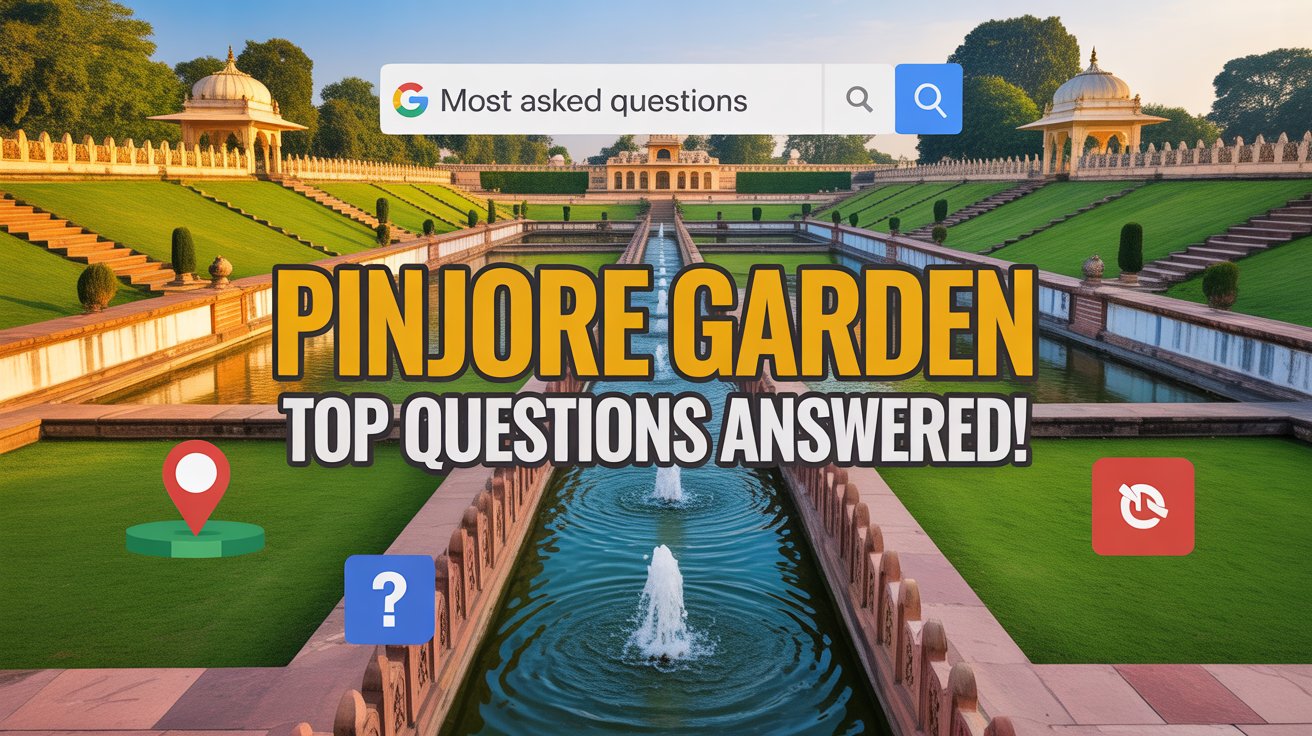
The garden follows the classic Mughal Charbagh layout—four-part symmetry structured around intersecting water channels. This configuration symbolizes harmony, balance, and the Islamic concept of paradise. Straight pathways, central axes, and geometric precision define its formal character.
B. Water Systems and Climatic Engineering
Water is the soul of the garden. Channels, fountains, and cascades flow through the terraces, creating evaporative cooling and enriching the sensory atmosphere. The entire hydrological design depends on naturally flowing spring water, enabling the garden to remain lush even in harsh summers.
C. Seven Terraces
The garden is built across seven descending terraces that guide visitors from ceremonial spaces to more intimate, shaded areas:
- Terrace 1: Grand entrance with gateways and the Sheesh Mahal.
- Terrace 2: Houses the Hawa Mahal, designed to enhance natural ventilation.
- Terrace 3: Traditionally planted with ornamental and fruit-bearing trees.
- Lower Terraces: Feature orchards, shaded pathways, and the Jal Mahal set within water features.
- Final Terrace: Contains an open-air theatre used for cultural events.
Each terrace offers a distinct experience while contributing to the unified design.
IV. Architectural Structures: The Mahals
A. Sheesh Mahal
Located on the uppermost terrace, this “Glass Palace” once served as a summer pavilion. Today, it functions as a heritage suite used for high-end stays offered by Haryana Tourism. The structure’s marble elements and reflective surfaces echo traditional royal aesthetics.
B. Hawa Mahal and Rang Mahal
The Hawa Mahal was engineered to channel breezes into its interior, acting as a naturally cooled space. The Rang Mahal, known for vibrant decorative work, now accommodates visitors through premium suites and hospitality facilities. Parts of the Rang Mahal are used for banquets and formal gatherings.
C. Jal Mahal
Positioned amid the water channels of the lower terraces, the Jal Mahal served as a serene retreat for royalty. It is now one of the garden’s most picturesque zones and forms the centerpiece of wedding and event rentals.
D. Lesser-Known Elements
Recent planning documents reveal the presence of structures such as the Rani Mahal and fortified bastions. This confirms that the garden once operated not only as a pleasure retreat but also as a secure, enclosed complex. These features broaden the garden’s historical narrative beyond ornamental architecture.
V. Integrated Heritage: The Bhima Devi Temple Complex
Next to the garden lies the ancient Bhima Devi Temple, dating between the 9th and 11th centuries. The remains have been curated into an open-air museum. Sculptures and architectural fragments are displayed in their original spatial layout.
Modern pathways, lighting systems, and visitor-friendly features unify the Mughal garden and the ancient temple into a single heritage experience. A small heritage train operates within the grounds to help visitors navigate the expansive site. Supplementary attractions—such as orchards, children’s areas, and landscaped green zones—enhance its family appeal.
VI. Tourism Operations and Visitor Experience
A. Hospitality and Revenue Model
Haryana Tourism manages a range of accommodations within and around the complex. Suites within the Mahals offer a heritage-stay experience, while auxiliary motels provide standard lodging. Conference halls, banquet areas, restaurants, and event lawns contribute to the site’s revenue model.
B. Destination Weddings
The garden has been promoted as a premium wedding venue. Different sections of the garden—ranging from the Jal Mahal area to the entire complex—can be booked for ceremonies. Strict aesthetic guidelines ensure that decorations remain sensitive to the heritage setting.
C. Visitor Logistics
The gardens are open throughout the week, with extended evening hours enhanced by decorative lighting and musical fountain shows. The most pleasant season for visiting is from October to March.
Annual events such as the Heritage Festival, Mango Festival, and Baishakhi celebrations draw significant visitor interest and support year-round activity.
VII. Modern Revitalization Under Swadesh Darshan 2.0
A. Purpose and Funding
A substantial redevelopment initiative is currently underway. Its goal is to strengthen the garden’s heritage character. The initiative also aims to elevate it into a modern tourist hub. The investment focuses on architectural restoration, environmental sustainability, and new commercial amenities.
B. Timeline and Oversight
The project adheres to a strict completion deadline, requiring rapid execution of tenders, construction, and conservation work. This timeline reflects the ambition to showcase the garden as a model for integrated heritage management.
C. Scope of Work
The revitalization includes:
- Conservation: Restoration of the Mahals, Rani Mahal, bastions, fortification walls, and historical landscaping.
- Sustainability: Installation of a sewage treatment plant, upgraded water systems, enhanced lighting, and improved security.
- Commercial Expansion: Development of a convention center, rooftop restaurant, upgraded shops, revamped parking, and improved public amenities.
All redesigns must align with the site’s traditional aesthetics while supporting long-term economic sustainability.
VIII. Conclusion
Yadavindra Gardens represents a rare intersection of multiple historical eras—ancient Hindu architecture, classical Mughal landscaping, and 20th-century princely restoration. Its story is one of grandeur, abandonment, rediscovery, and modern reinvention.
The garden is becoming a major cultural site due to its evolving identity. It serves as a cultural attraction, heritage hotel, event venue, and archaeological zone. It is one of North India’s most significant examples of integrated heritage tourism. The success of its ongoing modernization relies on maintaining this balance. It involves safeguarding fragile historical structures. New facilities are thoughtfully introduced to enhance the visitor experience.
If carried out with sensitivity and precision, the development will transform Yadavindra Gardens into a benchmark for sustainable heritage preservation. It will also make the gardens a revenue-generating landmark. Additionally, it will be a vibrant tourism landmark for decades to come.
Leave a Reply