
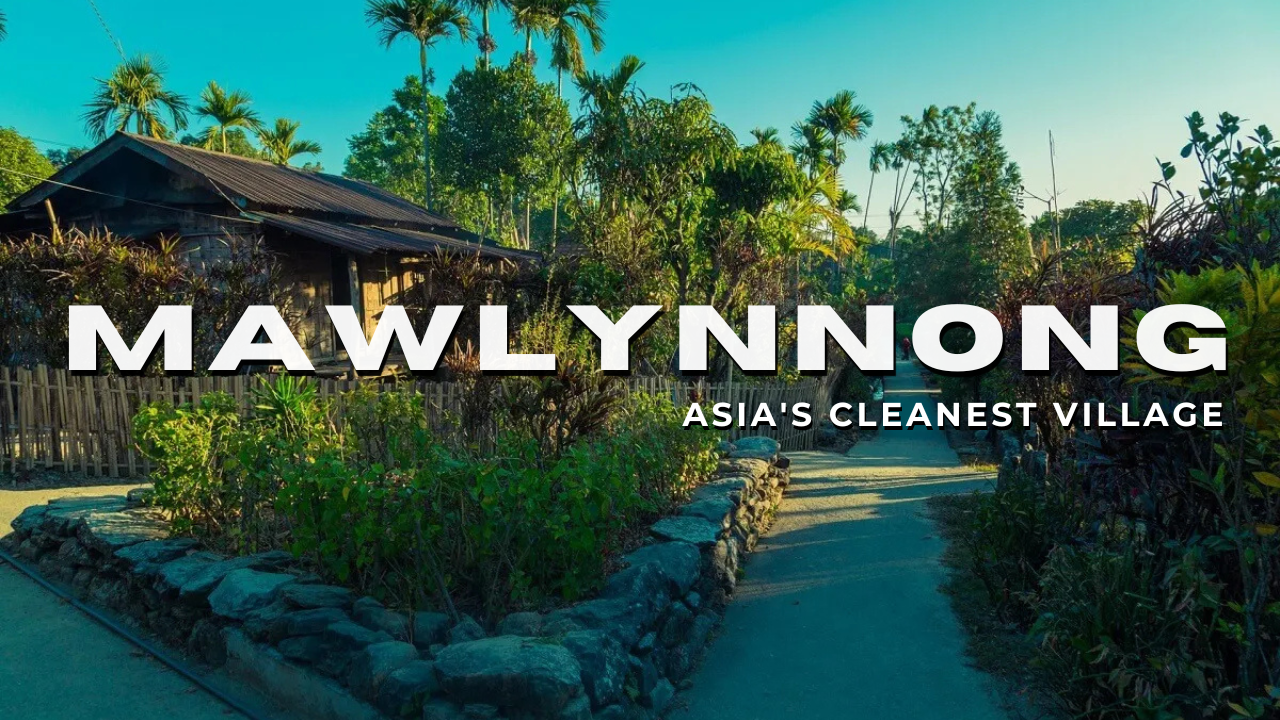
Introduction: Where Cleanliness Meets Tradition
Nestled in the emerald folds of Meghalaya’s East Khasi Hills, Mawlynnong (pronounced Maw-lehnong) is more than a village—it’s a revolution. Dubbed “Asia’s Cleanest Village” by Discover India (2003), UNESCO, and the BBC, this tiny hamlet of 95 households is revolutionary. It excels in sustainability. Sustainability here is redefined. It achieved this through community grit. Matrilineal empowerment and eco‑conscious tourism also contribute. Beyond its spotless lanes lies a rich story of cultural resilience, ecological innovation, and modern-day challenges. Let’s unravel the layers of Mawlynnong.
1. Geography & Demographics: The Basics
- Location:
- Coordinates: 25°11’N, 91°58’E
- Approximately 4 km from the India-Bangladesh border
- Elevation:
- 1,403 meters (or roughly 1,403 m above sea level)
- Climate:
- Subtropical highland with an annual rainfall of 12,000 mm – one of the wettest regions on Earth
- Population:
- Around 500 residents (primarily from the Khasi tribe, with 90% of the population being Christian)
- Literacy Rate:
- 100% – with an English‑medium school running up to Class 8
- Economy:
- Based on agriculture (betel nut, pineapple), handicrafts, and tourism
(Sources: ASA University Review case study & travel guides)
2. The Culture of Cleanliness: How It Works
A Tradition, Not a Gimmick
In Mawlynnong, cleanliness isn’t imposed—it’s a way of life. Every resident contributes to maintaining the village’s immaculate environment through daily rituals and innovative practices:
- Daily Rituals:
- Villagers sweep public areas twice daily
- Children actively collect litter on their way to school
- Waste Management:
- Bamboo dustbins are installed every 50 meters
- Segregation: Organic waste is directed to compost pits, while inorganic waste is recycled
- Plastic Ban: Strictly enforced since 2003 (violators face fines of ₹500)
- Water Conservation:
- Rainwater is harvested in natural stone basins
- Local streams are treated as sacred
Awards & Recognition
- 2003: Named “Asia’s Cleanest Village” by Discover India
- 2005: Featured in BBC’s Human Planet documentary
- 2016: Recognized by UNESCO for its eco‑tourism efforts
3. The Khasi Way of Life: Matrilineal Power
Matrilineal Society
Mawlynnong is celebrated for its unique social structure:
- Property Inheritance:
- The youngest daughter inherits ancestral property
- Family Identity:
- Children carry their mother’s surname
- Women’s Role:
- Women head households and manage businesses, including tourism ventures like homestays and local shops
Gender Roles
- Men:
- Handle farming, cooking, and childcare tasks
- Women:
- Lead and drive tourism initiatives, ensuring that economic empowerment flows through the community
Quote from Mishin, a Homestay Host:
“We don’t call it feminism—it’s just our way. My sons help me cook, and my daughters manage our homestay. Everyone contributes.”
4. Eco‑Tourism Marvels: Beyond Cleanliness
Living Root Bridges
- What They Are:
- Natural bridges woven from the aerial roots of rubber trees (Ficus elastica) over decades
- How They Work:
- Villagers use bamboo scaffolds to guide roots across rivers
- Significance:
- Recognized as a UNESCO tentative World Heritage Site
- There are 30+ living root bridges across Meghalaya
Sky-High Attractions
- Treehouses & Bamboo Watchtowers:
- Offer panoramic views of the Bangladesh plains and the lush Khasi Hills
- Sacred Groves:
- Forests like Lawkyntang in Mawphlang are protected as ancestral abodes
Community‑Driven Tourism
- Entry Fee:
- A nominal ₹50 per tourist helps fund local cleanliness drives
- Homestays:
- Over 15 family‑run stays available, with prices ranging from ₹1,500–2,500 per night (often including meals)
- Guided Tours:
- Local guides lead treks to living root bridges, waterfalls, and other natural marvels (costing around ₹300–500 per person)
(Sources: Travel guides & case studies)
5. Tourism Economy: Blessing or Burden?
The Good
- Employment:
- About 70% of the villagers are employed in tourism-related activities
- Revenue:
- Tourism contributes roughly 40% of the village’s overall income
- Infrastructure Investments:
- Profits fund school upgrades, solar lighting, and healthcare improvements
The Challenges
- Overtourism:
- During peak seasons (October–March), the village welcomes over 200 visitors daily, which can strain local resources
- Cultural Insensitivity:
- In 2023, an incident took place. A social media influencer shouted “Jai Shri Ram” inside a church. This action sparked outrage and led to an FIR.
- CM Conrad Sangma and local leaders stressed the need for respect towards local traditions and faith
- Waste Management Issues:
- Despite strict bans, some tourists still manage to sneak in plastic waste
Local Reaction:
“Tourists must respect our faith and traditions,” says village elder Rishot Khongthohrem.
6. Lessons for the World
Mawlynnong offers a blueprint for sustainable living that can inspire cities and communities around the globe:
- Community First:
- Decisions are made democratically by the village council (dorbar)
- Women-Led Development:
- Economic empowerment of women is the cornerstone of sustainability
- Tradition + Innovation:
- Ancient practices like building living root bridges work hand-in-hand with modern eco‑tourism strategies
- Zero Waste Model:
- With a waste-to-compost rate of 95%, Mawlynnong sets a high standard compared to many Indian cities
7. How to Visit Responsibly
Dos:
- Bring Reusable Items:
- Carry reusable bottles and bags
- Respect Local Rules:
- Adhere to the village guidelines (no littering, no smoking in public)
- Hire Local Guides:
- Engage local experts to enrich your experience
Don’ts:
- Respect Religious Sites:
- Avoid visiting sacred areas unless invited
- Mind Your Bargaining:
- Don’t bargain aggressively for handicrafts—respect the value of local craftsmanship
Best Time to Visit:
- October to March (avoid the heavy monsoons for a more comfortable experience)
8. Conclusion: The Future of Mawlynnong
Mawlynnong is a paradox—a pristine village grappling with modern challenges while steadfastly preserving its cultural and ecological ethos. Its success lies in balancing tradition with transparency, empowering women, and pioneering community‑driven eco‑tourism. As tourist numbers rise, the real challenge will be to keep the Khasi ethos while embracing progress. For travelers, Mawlynnong is an invitation to tread lightly, learn deeply, and leave only gratitude.
Final Thought:
“In Mawlynnong, every broomstroke is a love letter to the Earth.”
Mawlynnong isn’t just a destination—it’s a movement toward a cleaner, more sustainable future. Whether you’re here for the breathtaking landscapes or the vibrant culture, this village has something for everyone. It also offers lessons in sustainable living. It will change the way you see the world.
Mawlynnong combines a rich history with community-driven sustainability. It also boasts breathtaking natural beauty. The village truly lives up to its reputation as Asia’s Cleanest Village. Explore responsibly, respect local traditions, and let this remarkable destination inspire you to create a better future.
References & Further Reading:
- ASA University Review, Vol. 8 No. 1 (2014) – Case Study on Mawlynnong.
- Meghalaya Tourism Department.
- UNESCO World Heritage Centre.
- The Indian Express (2023 Church Incident Report).
Leave a Reply